

Best AI Radiology Software for Lung CT and X-ray Analysis
As we enter an age where technology is advancing at a breakneck pace, it's crucial to stay up to date with the latest innovations to ensure that we're making the most of what's available to us. This is especially true in the field of radiology, where accurate diagnoses can mean the difference between life and death for patients. AI-powered software has emerged as a game-changer for the field, enabling radiologists to analyze medical images with greater accuracy and speed than ever before.
In this article, we'll be taking a closer look at the best AI software for radiology, and exploring the key features that are crucial for any product hoping to make an impact in this field. Whether you're a radiologist looking to incorporate AI into your practice, or a software developer looking to create the next big thing in radiology, this article is for you. Let's dive in and see what the future of radiology has in store! When it comes to creating software that is accepted by all radiologists, there are several key aspects that a team needs to focus on:
The role of accuracy in radiology AI: why it's critical for patient outcomes
First and foremost, the accuracy and reliability of AI software for radiology cannot be overstated. When it comes to diagnosing medical conditions, radiologists rely on software to provide them with precise results. Even the slightest error or inaccuracy could be life-threatening, so the software must be designed and tested to ensure its accuracy.

To achieve this level of accuracy, software developers must ensure that their algorithms are properly validated and calibrated to ensure they are providing accurate results. This requires rigorous testing and validation procedures to ensure that the software is performing as intended. For example, the software should be tested against a large database of patient images and medical data to ensure that the results are consistent and accurate.
To train the AI software for the best accuracy, it's essential to have a diverse dataset with a wide variety of cases. The dataset should be thoroughly reviewed and annotated by expert radiologists to ensure that the AI model is being trained on accurate and reliable data. Additionally, the training process should use multiple algorithms and techniques, such as deep learning and convolutional neural networks, to optimize the accuracy and precision of the model.
Furthermore, ongoing monitoring and updating of the software are essential to ensure that it continues to produce accurate results. This can be achieved through a feedback loop mechanism, where the software receives feedback from radiologists on its performance, and the model is updated accordingly. This approach enables the software to learn from its mistakes and improve over time, increasing its accuracy and reliability.

Finally, it's crucial to have a team of experts, including radiologists and AI specialists, who can work collaboratively to develop and train the software. The radiologists bring their clinical expertise and understanding of the intricacies of medical imaging, while the AI specialists bring their technical knowledge and experience in developing AI models.
Ease of Use: Streamlining Radiologists with AI software
Radiologists are busy professionals with a lot on their plates, so they don't have time to deal with clunky or confusing software interfaces. Therefore, it is imperative that the software they use is intuitive and user-friendly. The doctors should be able to access the software quickly and easily, without having to deal with clunky or confusing interfaces. The software should be designed to make their jobs easier, not harder.
One way to ensure that the software is user-friendly is to conduct extensive user testing. This means that the software development team should work closely with radiologists to ensure that the software meets their needs and is easy for them to use. The team should gather feedback from radiologists at every stage of the development process to make sure that the software is meeting their expectations.
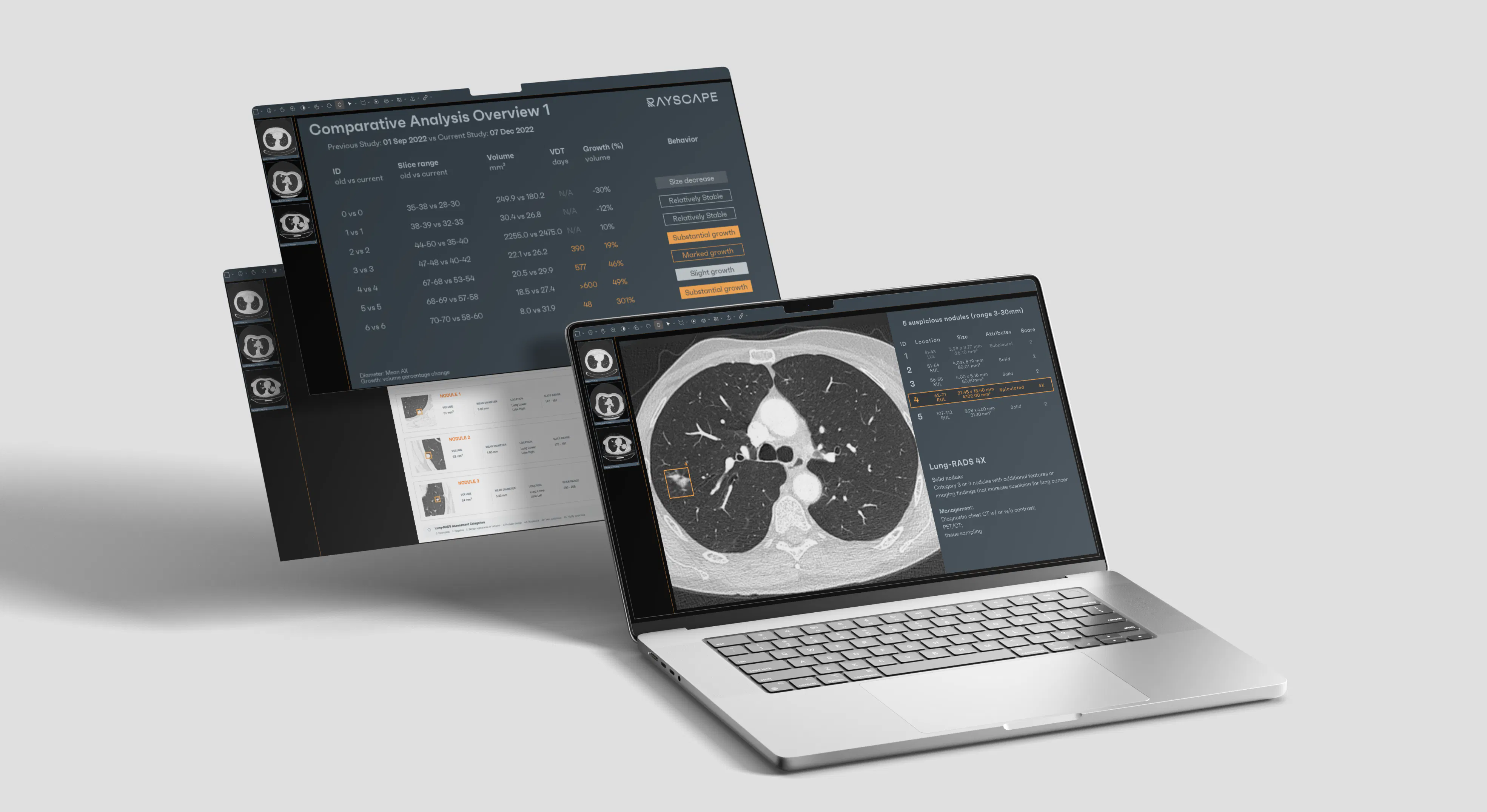
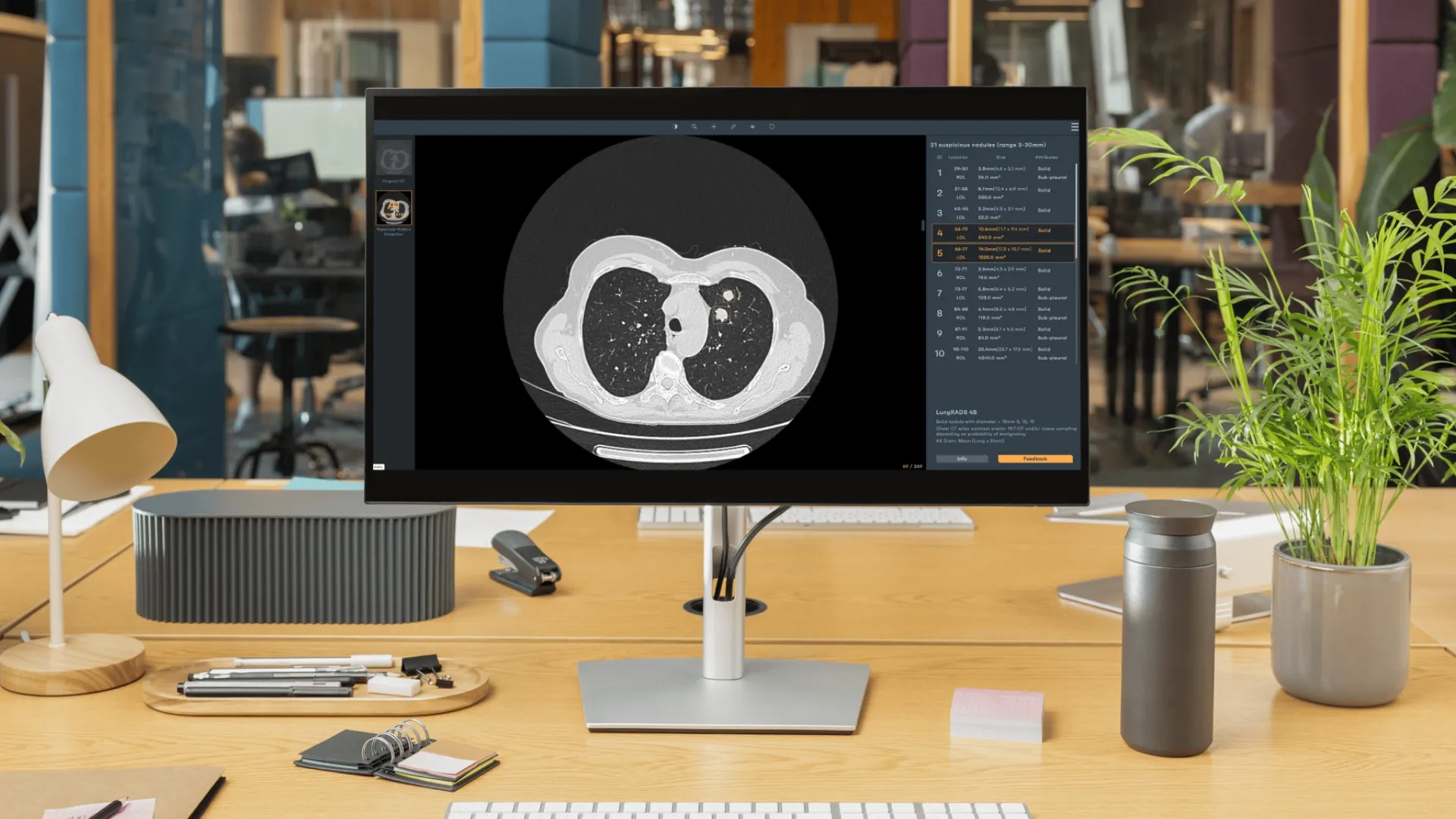
Ease of use is also a critical aspect when it comes to integrating the software into the hospital's existing systems. Radiologists should be able to seamlessly access the software and its results without having to navigate to a different app or browse the web. The software should be designed to work with the existing hospital systems, not against them. Rayscape software is an excellent example of this, as it integrates directly into the hospital's PACS system, showing the results directly in the original patient case.
While some software may boast flashy 3D visual representations or other bells and whistles, it's important to remember that these features may not actually be useful to radiologists in their day-to-day work. In fact, they may even be more of a distraction than a help. The most important thing is that the software provides accurate and reliable results in a timely and easy-to-understand manner. Complicated and unnecessary visualizations may look impressive in marketing materials, but they often do not have any practical use in the hospital setting. At Rayscape, we focus on delivering the most useful features for our users, without compromising on accuracy or ease of use. Our software is designed to integrate seamlessly with existing hospital systems, providing the information that radiologists need in a clear and concise way, without any unnecessary distractions.
Secure by design: why data security is critical in radiology AI development
Data security is paramount for radiology software. As patient information is highly sensitive, the software must be designed with the highest level of security in mind. Rayscape software, for instance, ensures patient privacy by anonymizing patient data before it's stored or transferred, making sure that sensitive information cannot be accessed by unauthorized personnel.
Encryption is another key aspect of data security. Radiology software should have built-in encryption and other security features to protect patient data from unauthorized access. For example, Rayscape software encrypts data in transit and at rest to ensure that patient information is secure at all times. The software also adheres to strict data protection laws and regulations, ensuring that all patient data is handled with the utmost care and attention.
In addition to encryption and anonymization, access control is also critical for data security. Radiology software should have robust access control features, enabling administrators to manage access to sensitive patient information.
Integration with Existing Systems: Enhancing Efficiency in Radiology Departments with AI
When designing radiology software, it's crucial to consider the specific needs and workflows of different hospitals and radiology departments. A one-size-fits-all approach simply won't work, as each hospital may have its own unique requirements and preferences. Therefore, the software must be customizable and adaptable to meet these specific needs. This means that radiologists can tailor the software to fit their workflow and preferences, ultimately increasing efficiency and productivity.
In conclusion, developing AI software for radiology requires a thoughtful approach that takes into consideration the unique needs and challenges faced by radiologists.
Accuracy and reliability are paramount, as any errors or inaccuracies could be potentially life-threatening. The software also needs to be intuitive and user-friendly, enabling busy radiologists to access information quickly and easily. Data security is critical, as the software deals with sensitive patient information, and must be designed with the highest level of security in mind. Finally, the software should be customizable and adaptable to the specific needs of different hospitals and radiology departments, enabling radiologists to tailor the software to their specific needs and preferences. By addressing these key aspects, AI software for radiology can make a significant impact in improving patient outcomes and advancing the field of radiology.

Discover how Rayscape works
integrate Rayscape AI into
your hospital's infrastructure
and improve both your
daily workflow and patients' experience.
