

AI-POWERED ONCOLOGICAL TRACKING
Track lung nodules growth and change over time
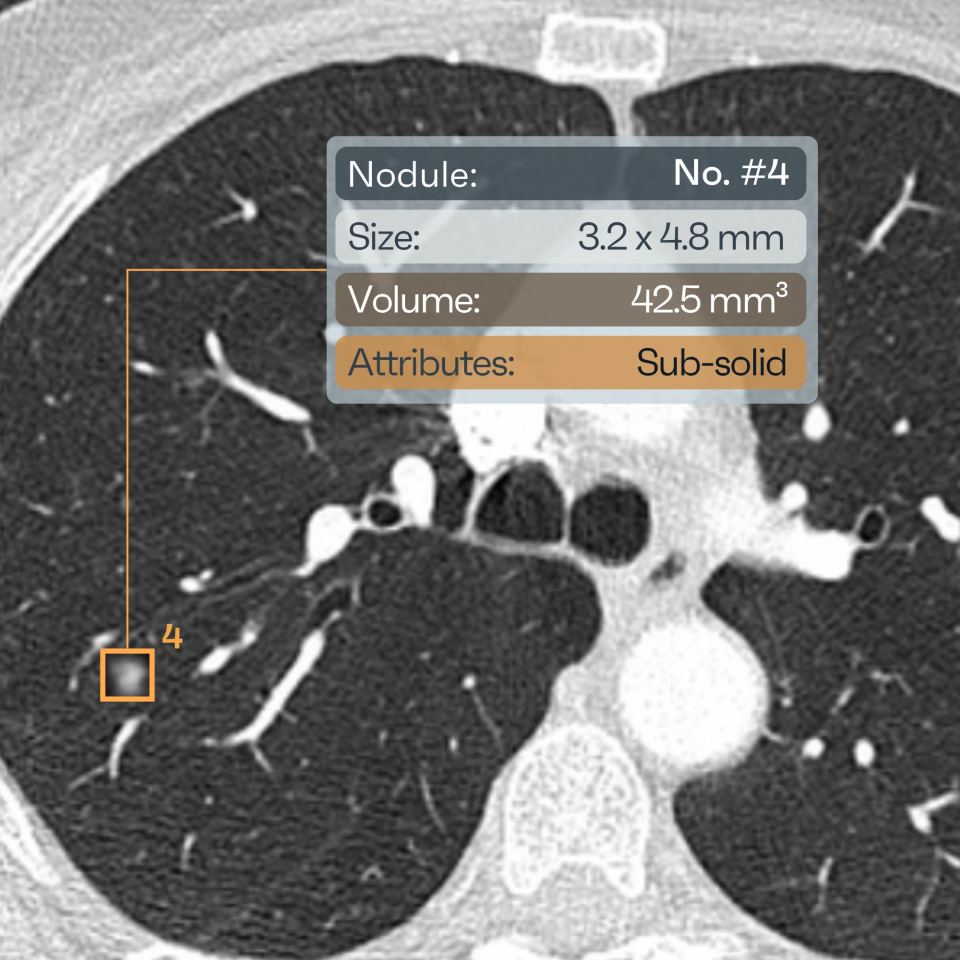
Rayscape LungCT is built for longitudinal oncological imaging, where small changes over time alter clinical decisions. The system analyzes chest CT studies to detect and track pulmonary lesions, generating structured reports with consistent measurements and cross-exam comparisons.
It supports assessment of growth, stability, and treatment response through quantitative outputs designed for reliable follow-up and decision-making.
The Clinical Challenge
 Subtle interval growthNeed for therapy response assessmentMulti-lesion complexityInconsistent measurement methods
How Rayscape supports longitudinal Tracking
RAYSCAPE’s AI WORKFLOW
 AI ALIGNS CURRENT AND PRIOR STUDIES
 MATCHING LESIONS ACROSS EXAMS
 RELEVANT CHANGES FLAGGED
 STRUCTURED DECISION SUPPORT
 RADIOLOGIST REVIEWS AND CONFIRMS FINDINGS
Rayscape uses proprietary comparison technology to automatically sync and align current and prior chest CT examinations, enabling high-consistency correlation of pulmonary findings over time.
By identifying the same nodules on different studies, the system helps clinicians recognize subtle changes that might otherwise be difficult to appreciate.
This longitudinal consistency supports confident interpretation of disease evolution, reduces reliance on manual measurements, and provides a clearer picture over months or years.
HOW AI FITS IN YOUR LUNG NODULE MONITORING WORKFLOW
Built for clinical reality
Rayscape integrates directly with your imaging ecosystem, allowing AI analysis to happen automatically in the background while radiologists work in familiar systems.
- Fully aligned with standard imaging workflows
- No parallel or separate reading environment required
- Scales from single-site practices to multi-site, high-volume centers
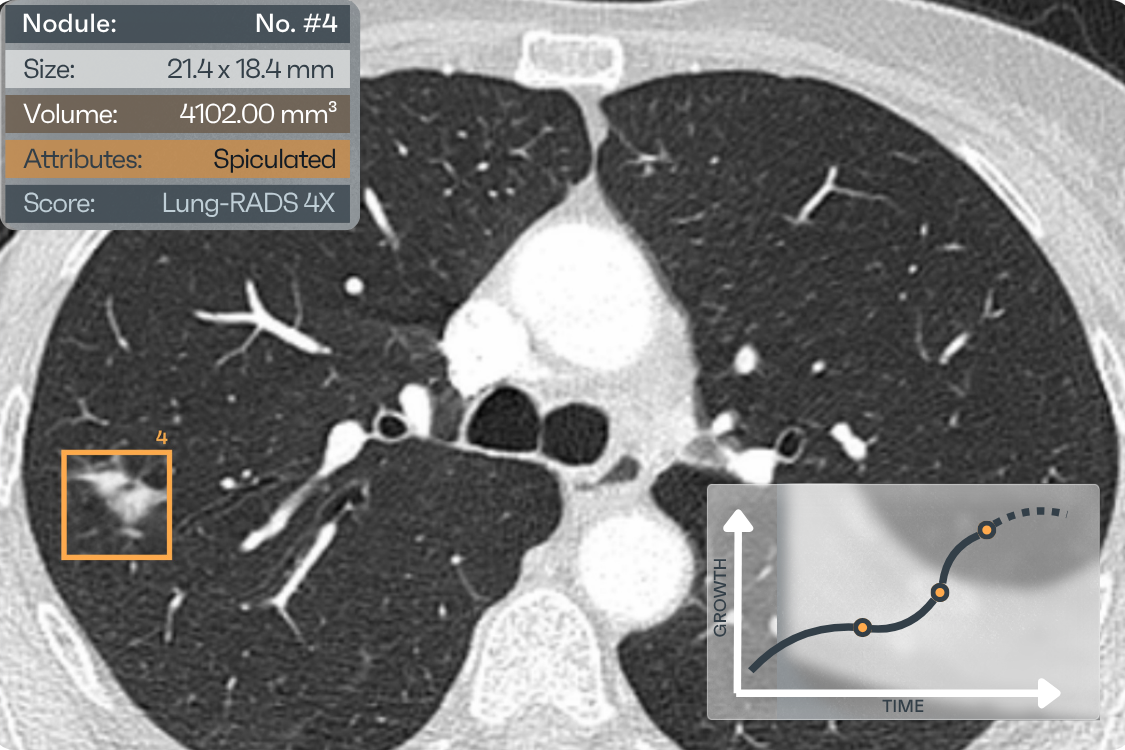 AI DETECTION
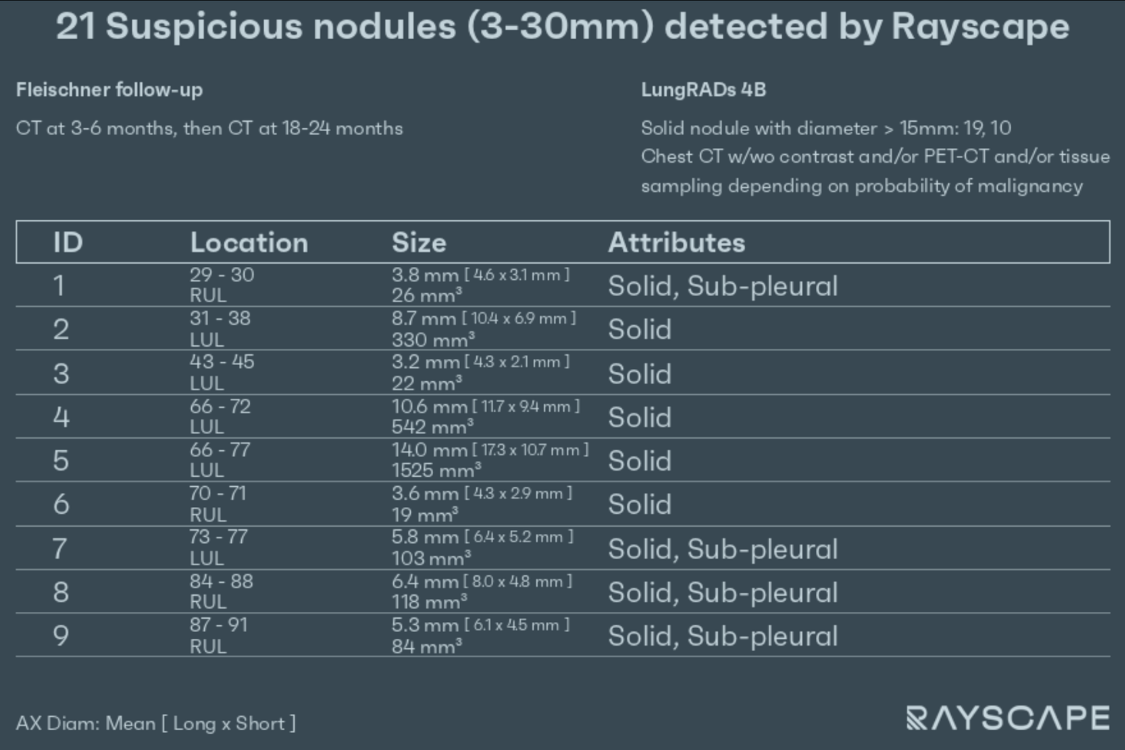 NODULE INFORMATION
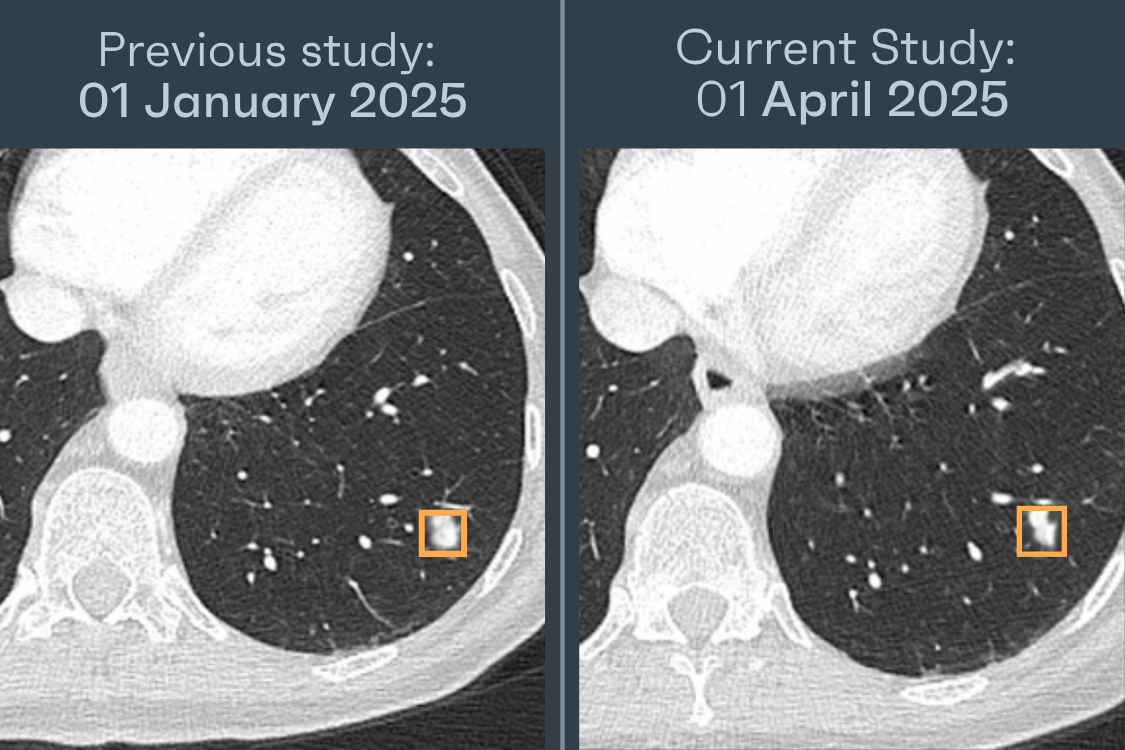 COMPARATIVE ANALYSIS
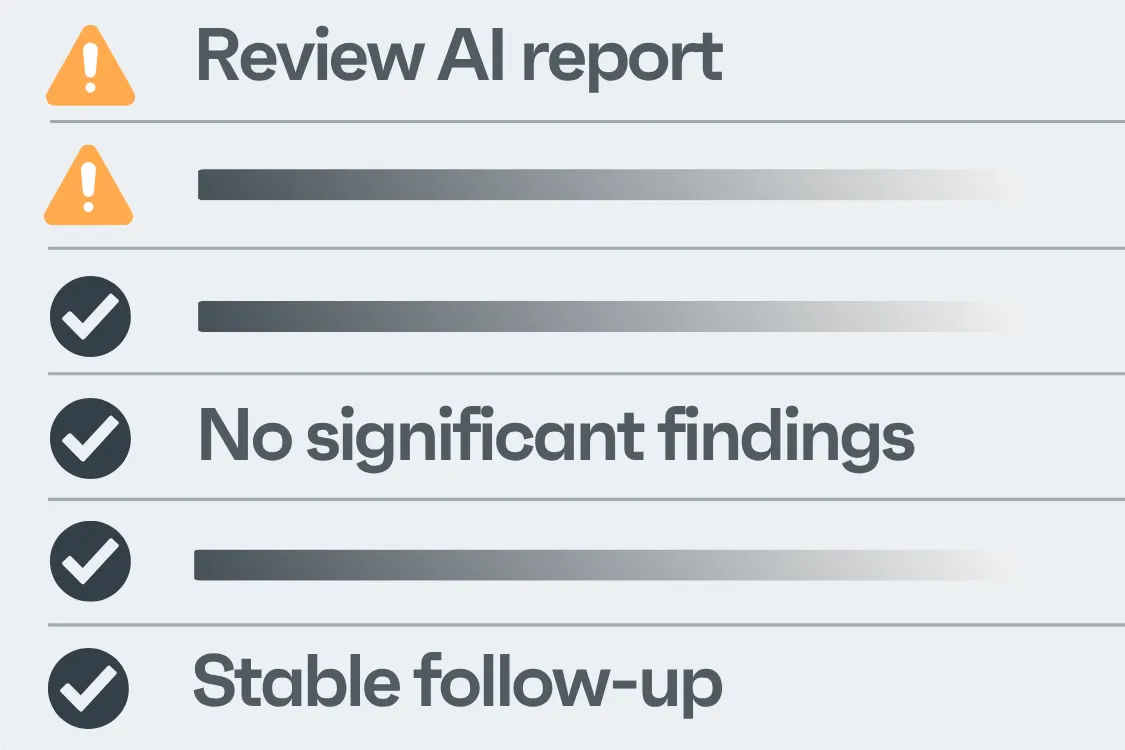 GROWTH REPORTING
 RADIOLOGISTAI DETECTIONNODULE INFORMATIONCOMPARATIVE ANALYSISGROWTH REPORTINGRADIOLOGIST
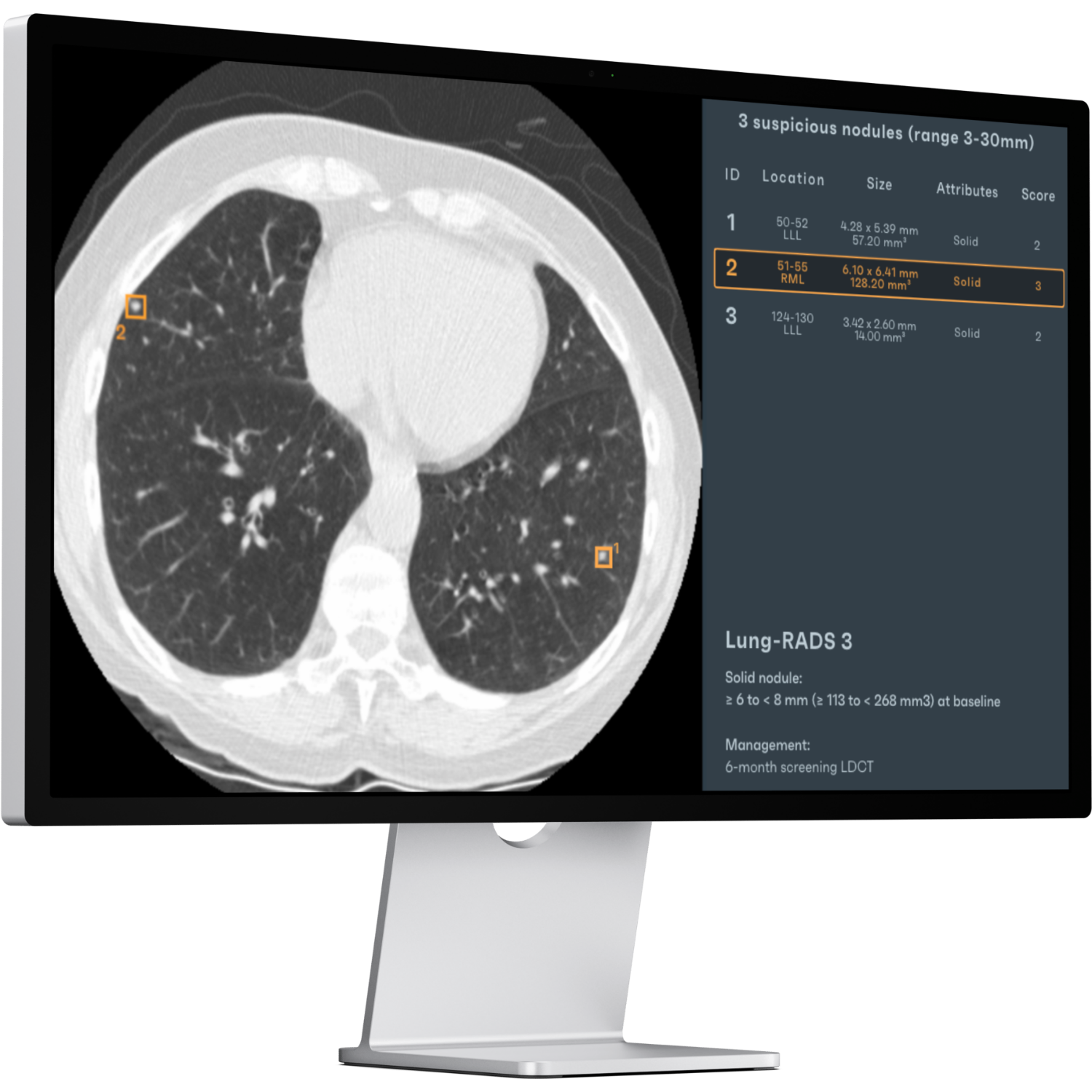
Clinically meaningful impact in lung nodules detection
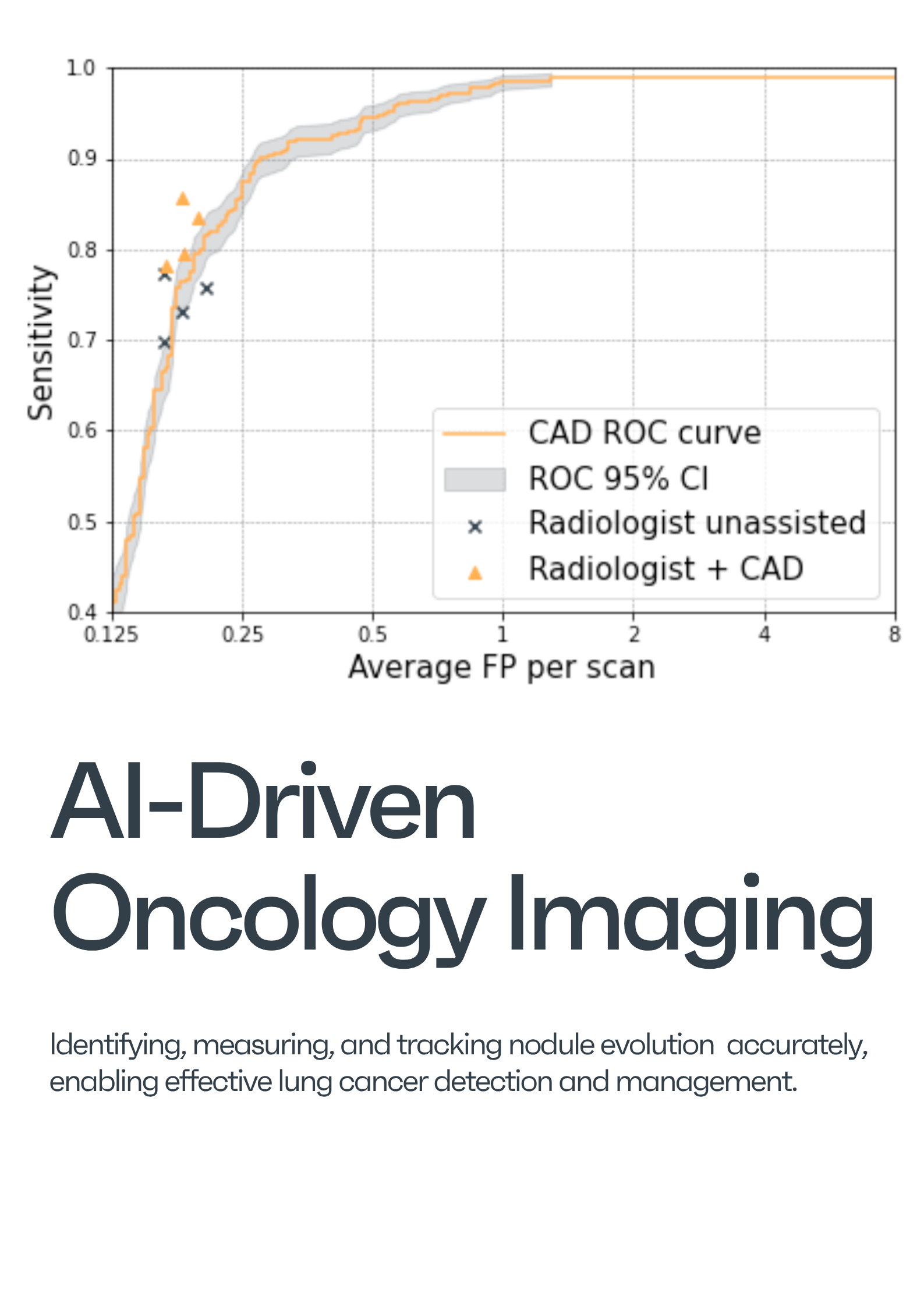
94% detection rate
FROC-based accuracy for lung nodules
+7.8% Sensitivity
Mean improvement in radiologists' nodule detection
No missed nodules
AI-supported review reduces the risk of overlooked lesions
27.5% Faster reporting
Reduced turnaround time through optimized workflow and prioritization
\\
CLINICAL EVIDENCE
PROVIDING Value for oncology follow-up workflows
Designed to function as a second reader support layer, Rayscape enhances case review, longitudinal comparison, and reporting while preserving established reading habits. The solution is DICOM-compliant, compatible with standard hospital IT environments, and built to scale from individual screening centers to population-level programs, delivering advanced AI support with minimal operational friction.
Supported by clinical research and real-world deployments
What screening teams need in one product
| Feature | Rayscape |
|---|---|
| Pulmonary nodule detection | |
| Longitudinal comparison | |
| Growth assessment | |
| Automated Nodule Analysis | |
| Monitoring across prior exams | |
| Automated Structured Reporting | |
| RECIST aligned outputs | |
| Validated Across Diverse Populations | |
| Interconnectivity of Tools |


\\

Rayscape streamlines one of the hardest parts of oncology follow-up: detecting, matching, and measuring lesions over time. With RECIST-aligned outputs and automatic longitudinal comparison, I spend less time on manual assessment and more time on clinical decision-making. The output is intuitive, the PACS integration fits naturally into our workflow, and our reports are noticeably faster and more consistent across readers.
"See how Rayscape fits into
your screening workflow
Learn how Rayscape fits into oncology follow-up workflows, from lesion comparison to structured output.

