

The Radiology AI Solution for Lung Cancer Pathway
In the fight against lung cancer, early detection and continuous monitoring are crucial to improving survival rates. Artificial intelligence (AI) has made significant strides in both areas, with independent, specialized systems playing a role throughout the patient's journey, from screening and detection to the measurement and tracking of cancers.
The complex challenge of end-to-end lung cancer detection and tracking is often addressed by integrating multiple niche AI tools. While this approach theoretically covers the entire patient journey, it presents significant gaps:
- It relies on independent products developed by different vendors, which were not designed or clinically validated to work together;
- Poor interconnectivity between systems;
- Gaps in pathway coverage;
- Increased costs due to working with multiple parties—the marketplace and each niche AI vendor;
- Technical support challenges—when part of the system fails, the resulting customer support chain can delay response times and confuse end-users.
As a result, these gaps and inefficiencies can impact not only the patient care pathway but also the analysis and integration of results, potentially limiting the benefits AI could offer both patients and clinicians. To address these challenges, a solution designed to support lung cancer patients throughout their entire journey is essential.
Rayscape's Lung Cancer Pathway Suite provides just that: it assists radiologists across the entire lung cancer pathway, from incidental findings and screening programs to periodic monitoring and progression assessment. It is an end-to-end approach, effectively addressing the gaps, overlaps, and inefficiencies present in the current landscape.

Incidental Findings
Incidental findings are often the first clue in the early detection of lung cancer, and they can play a pivotal role in identifying potential issues before symptoms arise. Rayscape's Lung Cancer Pathway Suite is designed to maximize early detection by focusing on these incidental findings, ensuring no abnormalities are overlooked during routine imaging exams.
Rayscape emphasizes maximizing early detection by:
- Covering and analyzing lung bases visible on abdominal CTs: often, incidental nodules located in the lung bases are missed during abdominal CT scans, as these scans are not primarily focused on the lungs. Rayscape addresses this by covering and analyzing the lung bases, which are visible on abdominal CTs, ensuring that these potentially crucial findings are not ignored;
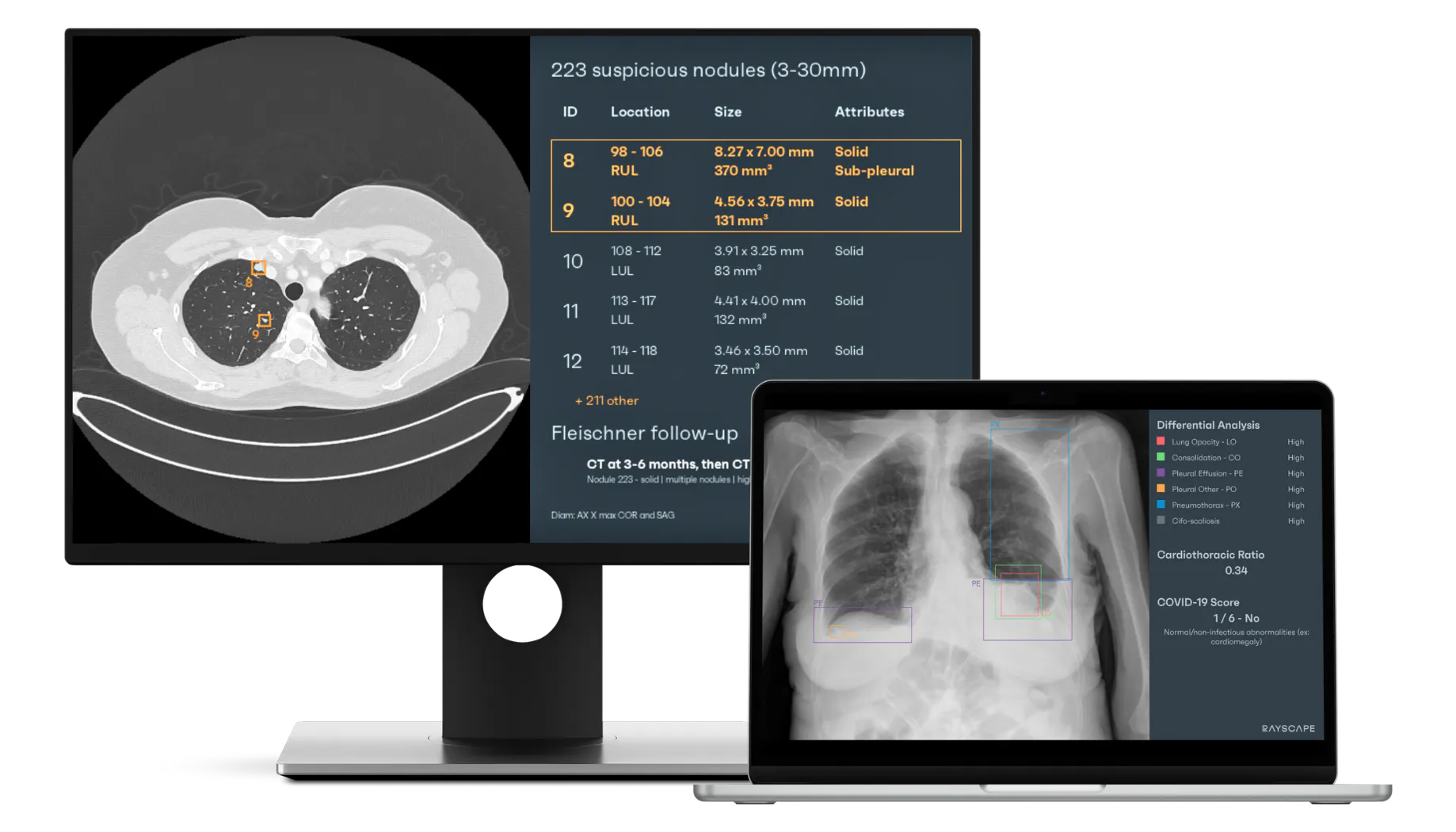
- Providing radiologists with automatically calculated Fleischner criteria follow-up recommendations on CT: For any nodules detected on CT scans, Rayscape automatically calculates and provides follow-up recommendations based on the Fleischner Society guidelines. This helps radiologists make evidence-based decisions regarding the need for further imaging or intervention, standardizing the follow-up process for each patient;
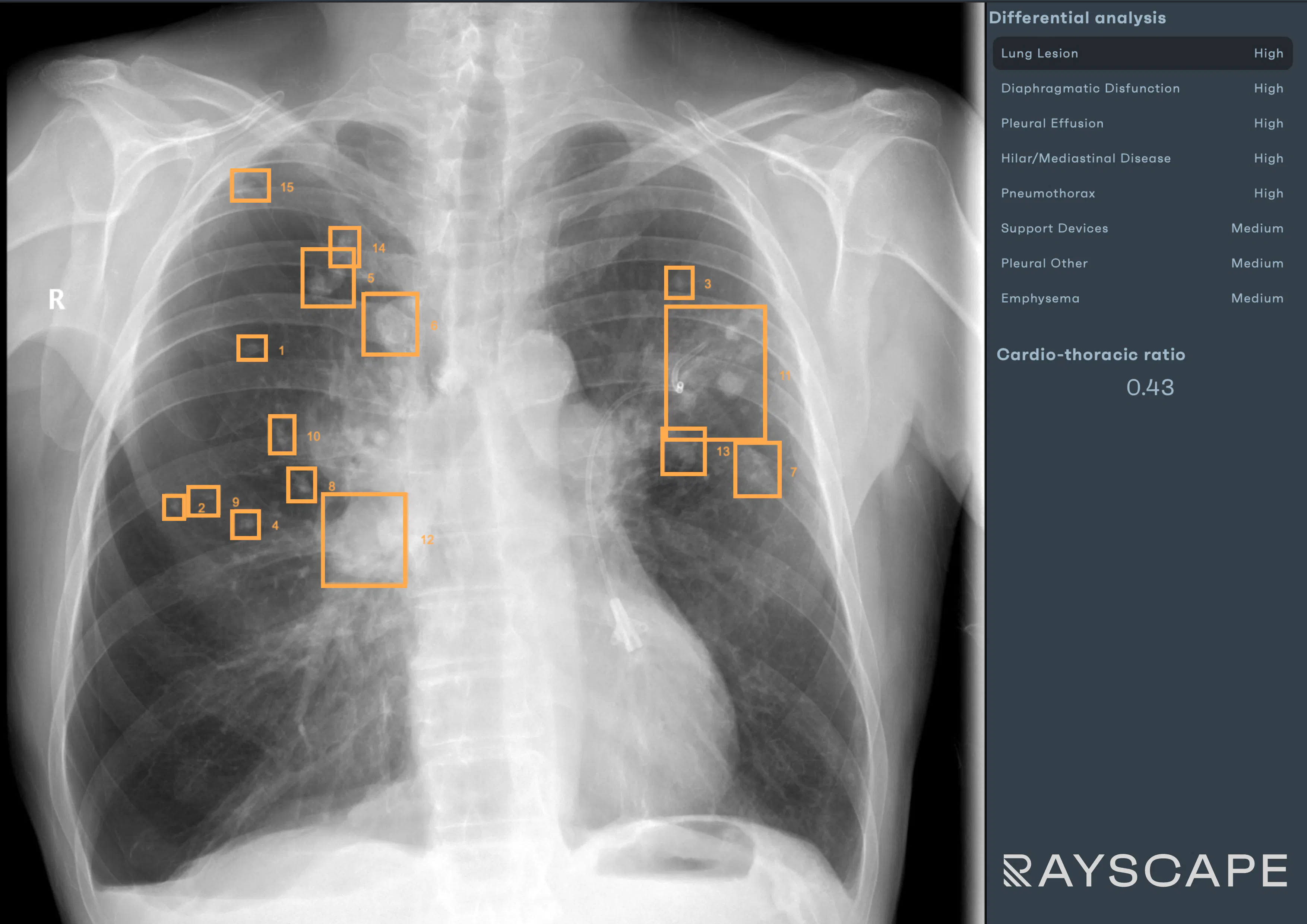
- Leveraging AI-generated, bone-suppressed auxiliary visualizations: One of the key challenges in chest X-rays is that lung nodules can be obscured by the ribs, making them difficult to detect. Rayscape employs AI-generated, bone-suppressed auxiliary visualizations to "see through" the ribs, significantly improving the chances of detecting nodules that might otherwise go unnoticed on chest X-rays;
- Detecting all types of lung nodules on both CTs and X-rays: Whether the imaging modality is a CT scan or an X-ray, Rayscape is capable of identifying all types of lung nodules, including solid, part-solid, and ground-glass nodules. This comprehensive detection ensures that no potentially dangerous lesion is missed, regardless of its characteristics or size;
Screening
Lung cancer screening has gained increasing attention due to its potential to significantly improve survival rates through early detection. Both chest X-rays and low-dose lung CTs are key imaging modalities for screening, and Rayscape supports both.
The Shortcomings of Traditional Screening Methods
For years, we've relied on chest X-rays and CT scans to screen for lung cancer. They've saved lives, no doubt about it, but they're not perfect. Chest X-rays often miss small or early-stage tumors, leading to late diagnoses when treatment options are limited. CT scans, especially low-dose computed tomography (LDCT), have been more effective in detecting early-stage lung cancer. They come with their own set of issues like high false-positive rates and concerns about repeated radiation exposure.
The Problem with Multiple Independent AI Tools
To improve accuracy, many healthcare providers have started using AI-powered tools. But here's the catch: these tools are often specialized and come from different vendors, leading to problems such as poor compatibility between them, higher implementation costs, and integration gaps. These issues don't just strain resources; they can also limit how much AI helps patients and doctors.

Why an Integrated AI Solution Makes Sense
An all-in-one AI tackles these problems by offering a seamless solution that supports patients throughout their entire journey—from the first screening to ongoing monitoring and assessing how the disease progresses. By combining CXR and lung CT algorithms into a single system, healthcare providers can benefit from:
- The integrated algorithms work together to detect all types of lung nodules, whether they're solid, part-solid, or ground-glass.
- Automated structured reporting speeds up documentation, helping doctors make quick decisions and communicate effectively with patients.
- Standardized reports reduce variability, ensuring that findings are clear and actionable.
- Dealing with one vendor simplifies everything from billing to tech support, saving both time and money.
Why One Integrated Solution Beats Multiple Vendors
Using an integrated AI solution has clear advantages over juggling different tools from various vendors:
- Seamless Data Integration: A unified platform ensures that data from different imaging methods are analyzed cohesively, giving a comprehensive view of the patient's condition.
- Simplified Workflow: Doctors and radiologists work within a single interface using consistent reporting formats, which cuts down on errors and makes training easier.
- Better Support: With just one point of contact for technical issues, problems get resolved faster, minimizing any disruption to patient care.
- Future-Proofing: Integrated systems are easier to update and scale as new AI advancements and imaging technologies come along.
Solutions like Rayscape's Lung Cancer Pathway Suite are setting new standards, making early detection and precise monitoring not just possible but practical. Rayscape CXR provides a detailed view of the chest in under 30 seconds, helping radiologists quickly identify suspicious nodules or abnormalities under various screening protocols.
How the Rayscape suite works:
Step 1: chest x-ray analysis & reporting
Rayscape CXR provides a detailed view of the chest in under 30 seconds, helping radiologists quickly identify suspicious nodules or abnormalities under various screening protocols.
Automatic structured report generation allows radiologists to efficiently document their findings, facilitating swift decision-making and patient communication.
Step 2: lung CT scan analysis and reporting
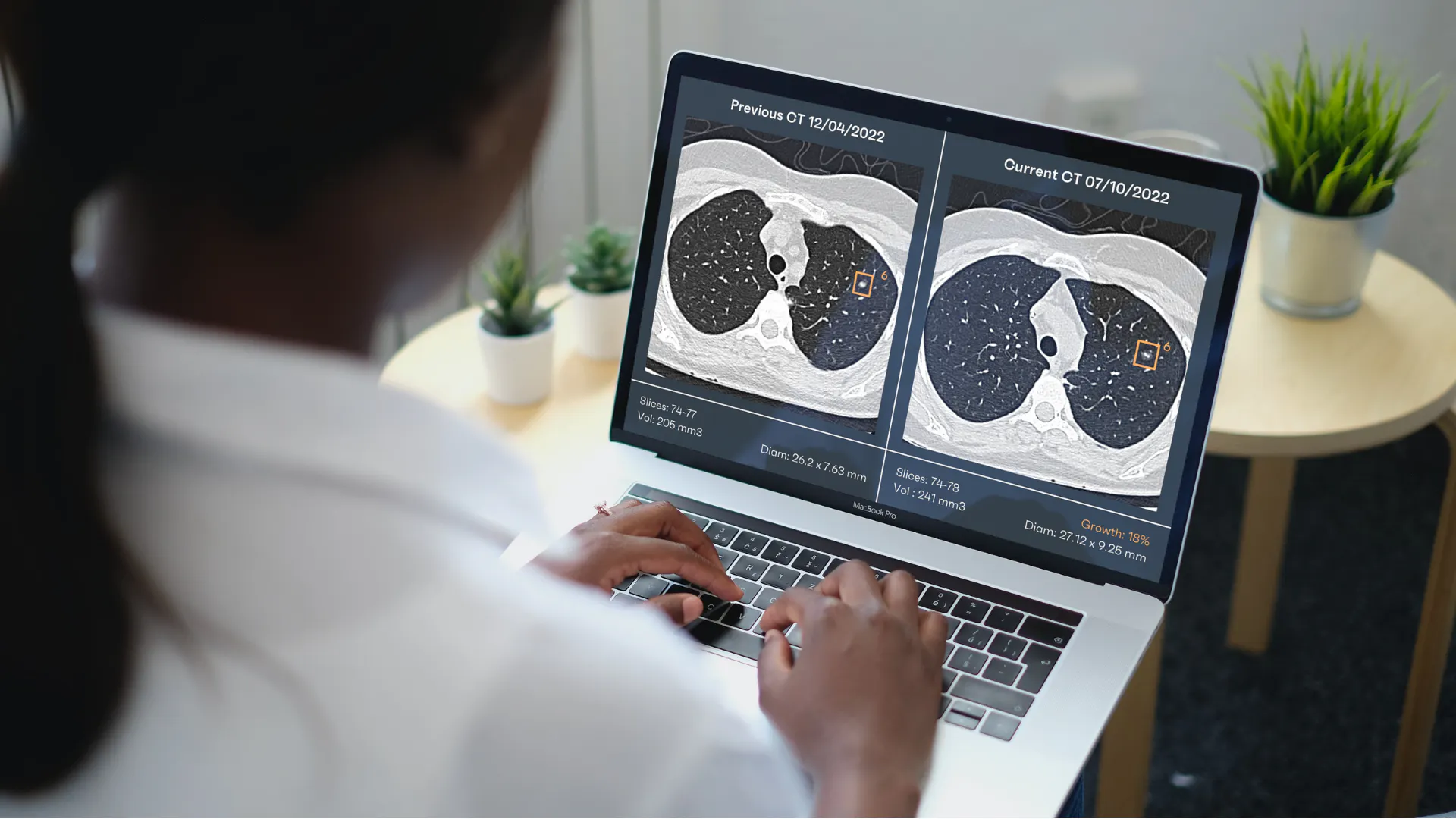
If a follow-up CT is required, Rayscape Lung CT precisely identifies and localizes all types of nodules (solid, part-solid, ground glass) across various CT scan modalities, including contrast, non-contrast, and low-dose scans.
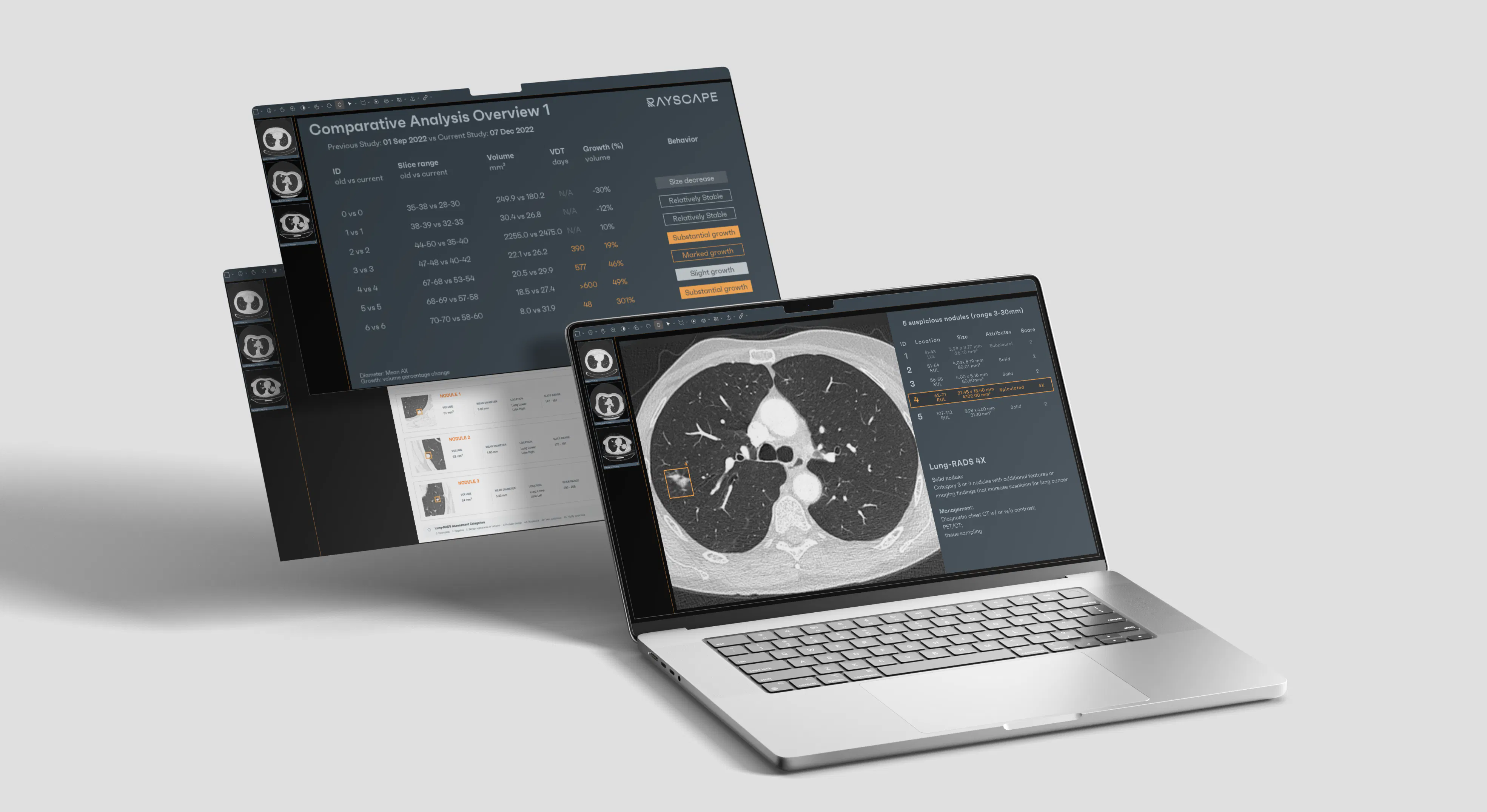
By segmenting the nodules, Rayscape Lung CT calculates their diameter and volume and assigns comprehensive attributes to each nodule. This detailed analysis helps radiologists accurately determine the nature of the nodules. As with X-rays, automated structured reporting saves time and standardizes the final report, enhancing consistency and clarity.
Diagnosis, Monitoring, and Follow-Up
Once a suspicious lung nodule has been detected, ongoing monitoring becomes a critical part of the patient’s care. The ability to track changes in nodule size, appearance, and growth rate over time is essential for making informed decisions about diagnosis, treatment, and potential interventions. Rayscape's Lung Cancer Pathway Suite is designed to streamline this process, enabling radiologists to monitor nodule evolution with precision and efficiency.
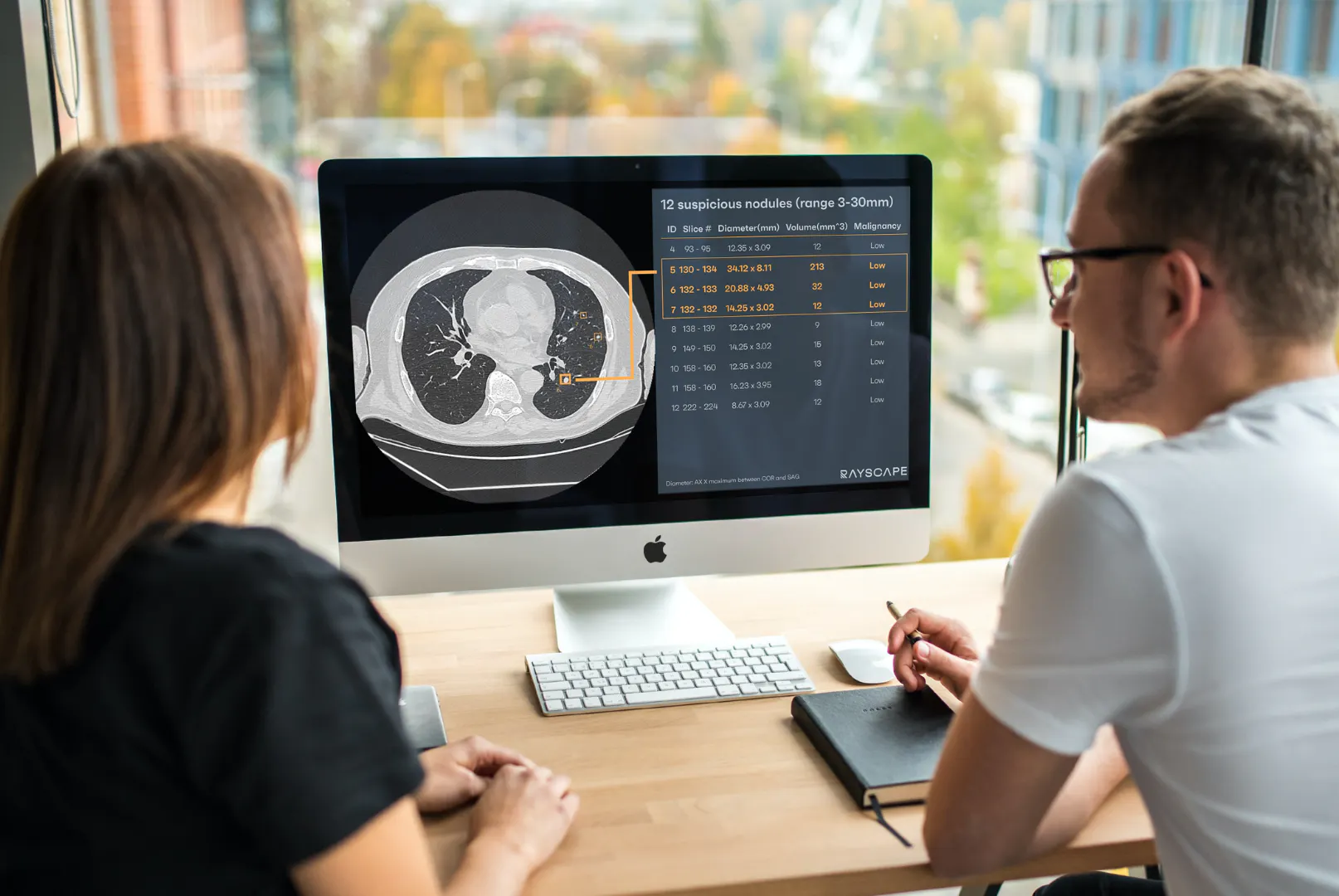
Besides the comprehensive nodules analysis already mentioned, Rayscape Lung CT supports the monitoring of cancer patients by:
- Comparison Across Different Imaging Modalities and Devices: Rayscape is designed to handle the variability in imaging parameters that often occurs in real-world clinical settings. It can accurately compare CT scans acquired with different modalities (e.g., contrast, non-contrast, low-dose) and from various imaging devices. This feature ensures that radiologists receive reliable, comparable data, regardless of the equipment or protocol used, improving the consistency of long-term monitoring.
- Structured Reporting for Follow-Up: In addition to nodule tracking, Rayscape generates automated structured reports that summarize all findings in a clear, standardized format. This includes information on nodule size, growth, VDT, and other relevant attributes. These reports help radiologists communicate findings more efficiently and ensure that key details are not missed, facilitating timely and informed clinical decisions.
- Volume Doubling Time (VDT) and Growth Percentage: The system calculates important metrics such as volume doubling time (VDT) and growth percentage for each nodule. VDT is a critical indicator of tumor aggressiveness—a rapidly growing nodule with a short VDT may require more immediate intervention, while a slower-growing nodule can suggest a less aggressive lesion. These metrics help radiologists assess the malignancy potential of a nodule, contributing to more accurate treatment planning and decision-making.
- Assessing Treatment Response: For patients undergoing treatment for lung cancer, monitoring is critical to evaluating how well the treatment is working. Rayscape’s ability to track changes in nodule size and characteristics over time provides essential data to assess treatment efficacy. If a nodule is shrinking, it may indicate a positive response to therapy. Conversely, if the nodule grows or new nodules appear, it could suggest treatment resistance or disease progression.
Conclusion
The Rayscape Full Lung Cancer Pathway AI Suite, combining the capabilities of chest X-rays and lung CTs, offers a comprehensive, end-to-end solution for the radiology lung cancer pathway. From incidental findings and screening programs to periodic monitoring and progression assessment, these AI-powered tools work together to maximize the assistive value across the entire lung cancer journey.
Interested in learning more about Rayscape's custom AI solutions? Feel free to contact us here.

Discover how Rayscape works
integrate Rayscape AI into
your hospital's infrastructure
and improve both your
daily workflow and patients' experience.
