

NHS Secures £21 Million for AI Breakthroughs in Healthcare
The National Health Service (NHS), a cornerstone of the United Kingdom's healthcare system, has been grappling with numerous challenges. From limited budgets to workforce shortages and increasing patient demands, the NHS is at a critical juncture. To tackle these struggles head-on and ensure the delivery of high-quality healthcare services to all, it is imperative to explore innovative solutions and leverage the power of technology. With the advent of artificial intelligence (AI), a groundbreaking opportunity arises to address the NHS's persistent issues head-on.
Embracing AI: A Bold Move by NHS Trusts
In a bold move, NHS Trusts are embracing artificial intelligence (AI) to revolutionize healthcare. The government's commitment to deploying AI decision-support tools across hospitals endorses the potential of this cutting-edge technology. NHS Trusts now have the opportunity to bid for funding and fast-track the deployment of promising AI tools, aiming to treat patients more quickly, especially during the winter season. This bold initiative holds the promise of transforming patient care by significantly improving diagnosis times for critical conditions like cancers, strokes, and heart conditions. With the government's resounding endorsement of AI decision software, we are left pondering the immense possibilities that lie ahead. How might this cutting-edge technology reshape the system?
Artificial Intelligence in Stroke Care: Revolutionizing Diagnosis and Treatment
NHS staff will be given the latest artificial intelligence (AI) technology to diagnose and treat patients more quickly thanks to a new £21 million fund announced by the Health and Social Care Secretary. The NHS faces a multitude of struggles that hinder its ability to provide seamless and accessible care. Budget constraints put a strain on resource allocation, leading to longer waiting times and compromised quality of care. Workforce shortages, including a shortage of doctors and nurses, further exacerbate these challenges. Moreover, the increasing demands from an aging population and the burden of chronic diseases place immense pressure on an already stretched system. It is evident that transformative measures are needed to alleviate these struggles.

The integration of AI in the healthcare sector marks a paradigm shift in medical professionals' approach to diagnosis and treatment. Within the AI Diagnostic Fund, a specific focus lies on enhancing stroke care by deploying AI stroke-diagnosis technology. The government's commitment to expanding this technology across stroke networks by the end of 2023 represents a significant leap forward in stroke treatment and recovery. By leveraging AI algorithms and data analysis, medical professionals gain potent tools to expedite stroke diagnosis, enabling quicker interventions and potentially saving lives. The Health and Social Care Secretary has also committed to rolling out Artificial Intelligence stroke-diagnosis software to 100% of stroke networks by the end of 2023 – up from 86% today – helping thousands of patients suffering from a stroke get treated faster.
Detecting Cancer Early: AI's Impact on Chest X-ray Analysis
As NHS Trusts apply for the AI Diagnostic Fund, its impact extends beyond stroke care to encompass a wide range of critical conditions. Clinicians will have access to advanced diagnostic capabilities by harnessing AI imaging and decision support tools, enabling earlier and more accurate diagnoses. This holds tremendous promise, particularly in chest X-ray analysis for cancer patients. With lung cancer being the leading cause of cancer death in the UK, and over 600,000 chest X-rays performed each month in England, widespread deployment of diagnostic AI tools has the potential to detect cancer at its earliest stages, when treatment outcomes are typically more favorable.
In addition to the potential for improved accuracy, the use of AI in radiology could also lead to increased efficiency. AI software can process and analyze large amounts of data quickly, potentially freeing up time for radiologists to focus on other tasks. This can be particularly useful when it comes to analyzing large datasets, such as population-level data or data from large clinical trials. AI can is able to process and analyze this data much more quickly than humans, potentially providing insights that would not be possible through manual analysis.
Leveraging Data: Optimizing Healthcare Delivery through AI
Amidst the celebration of the NHS's 75th anniversary, the focus on adopting cutting-edge technology becomes paramount to delivering exceptional healthcare. Data has emerged as a critical asset, and the NHS can leverage it to make informed decisions and optimize resource allocation. Advanced analytics, artificial intelligence, and machine learning algorithms can analyze vast amounts of patient data, uncovering valuable insights that can guide clinical decisions, predict disease patterns, and improve operational efficiency.

Health and Social Care Secretary Steve Barclay said that “Artificial intelligence is already transforming the way we deliver healthcare, and AI tools are already making a significant impact across the NHS in diagnosing conditions earlier, meaning people can be treated more quickly. As we celebrate the NHS’s 75th birthday and look ahead to the future, I’m focused on adopting the latest cutting-edge technology across our health and care system to ensure we can continue to deliver the best care for our patients and cut waiting times, which is one of the government’s five priorities.”
Balanced Approach and Compliance
The integration of AI software in the healthcare system extends beyond diagnosis and treatment. The NHS recognizes the potential of AI in managing waiting lists more efficiently, improving cardiovascular monitoring, and supporting patients in managing their conditions at home. Adopting Artificial Intelligence tools not only benefits patients but also enhances the efficiency and effectiveness of healthcare delivery.
To ensure responsible spending and regulatory compNHS Trusts must maintain a balanced approach as they apply for the AI Diagnostic Fund. While the fund is open to bids for any AI diagnostic tool, strict scrutiny ensures optimal cost-effectiveness. Robust evaluation processes allow the NHS to ensure the AI Diagnostic Fund yields a maximum value, delivering on its promise to transform healthcare through AI technology.
Supporting Safe Deployment: The AI & Digital Regulation Service
To support the safe and effective deployment of AI devices, the government has recently introduced the AI & Digital Regulation Service. This service serves as a crucial resource for NHS staff, providing them with the necessary information and guidance in deploying AI devices. By simplifying and demystifying the regulatory landscape surrounding AI in the healthcare sector, the service supports developers and adopters of AI technology, saving valuable time in bringing innovative products to market. With a focus on promoting compliance and safety, the AI & Digital Regulation Service enables healthcare professionals to harness the full potential of AI in a secure and regulated manner.

The £21 million funding will be open for bids for any AI diagnostic tool that trusts want to deploy but will have to represent value for money for the funding to be approved. The government has already invested £123 million into 86 Artificial Intelligence technologies until now and is looking to increase the rate in the upcoming years.
The introduction and expansion of AI technology within the NHS signify a significant milestone in the future of healthcare. With an ever-growing demand for high-quality and efficient healthcare services, AI has the potential to transform patient care on multiple fronts. From accelerating diagnosis and treatment to improving patient outcomes and streamlining healthcare processes, AI-driven innovations hold immense promise. Ongoing investment in AI software reflects the NHS's commitment to embracing innovation and staying at the forefront of healthcare advancements. As AI continues to evolve and integrate further into the healthcare ecosystem, its role in transforming patient care is poised to grow, shaping the future landscape of healthcare delivery and improving the lives of patients across the nation.
AI Software for Radiology
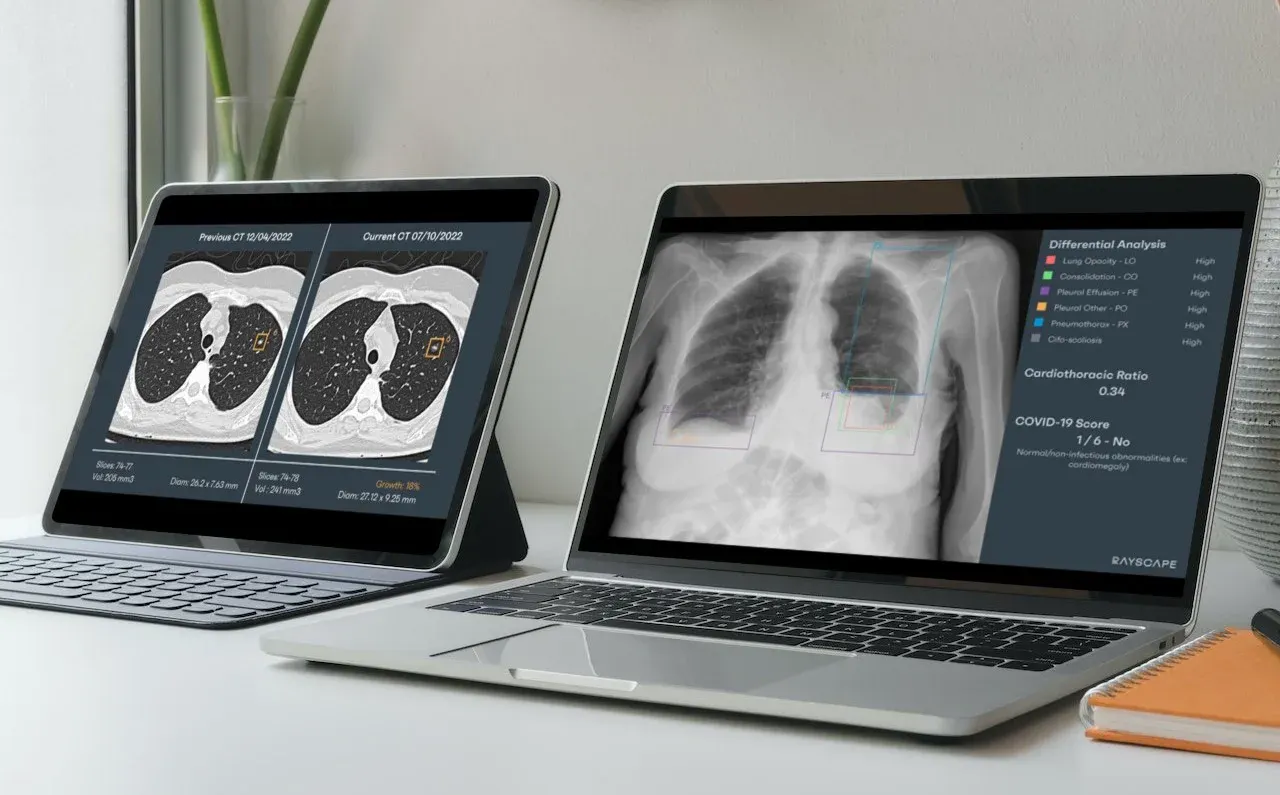
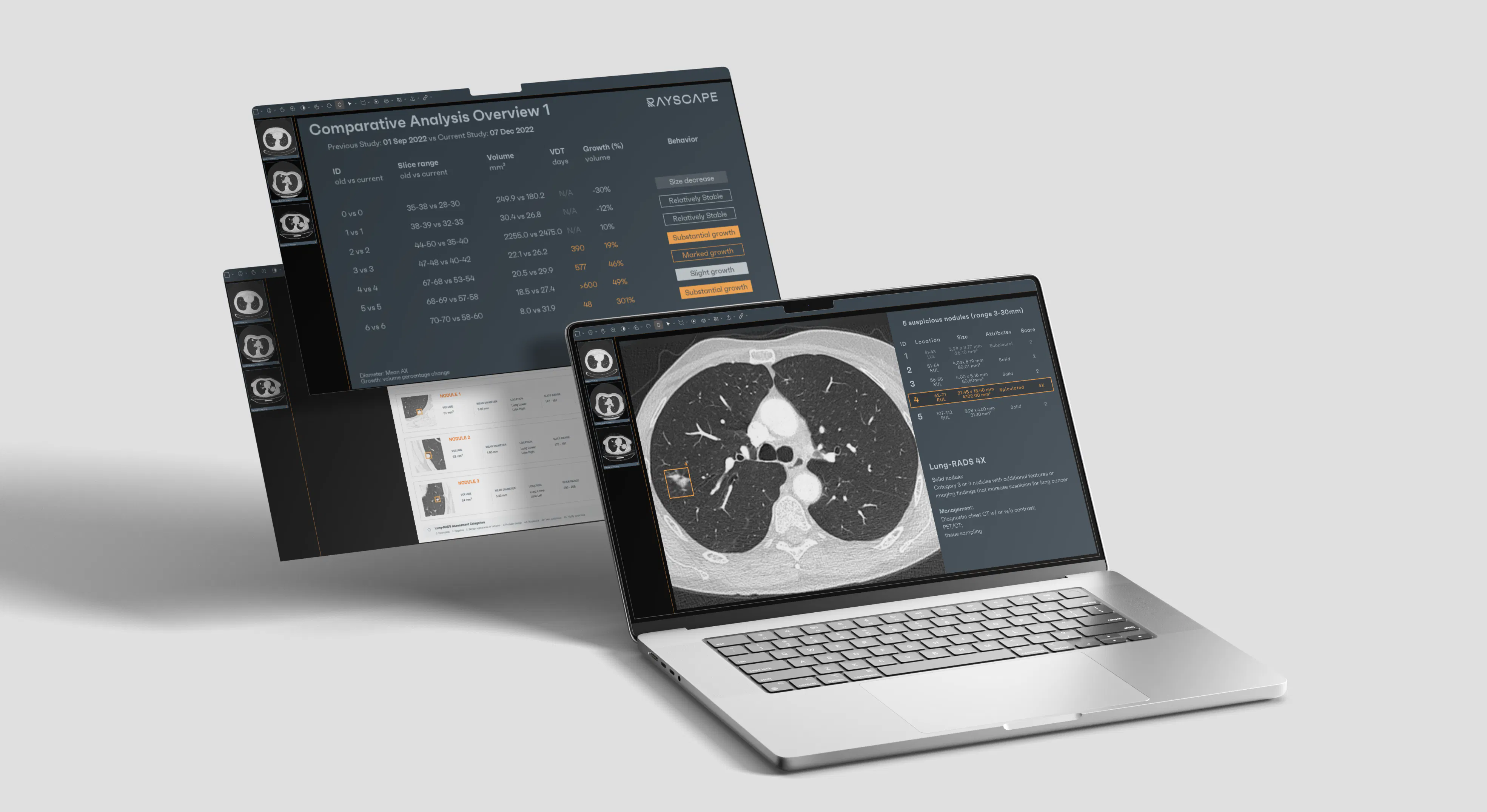
At Rayscape, we develop a software platform that is using Artificial Intelligence to help radiologists analyze medical images faster and more efficiently. Our AI-based algorithms are seamlessly integrated into the doctor’s workflow, helping them analyze chest X-rays and lung CTs more efficiently. Our team is dedicated to creating the best digital radiology system for medical imaging interpretation. Rayscape AI includes pathologies detection, localization, and automatic measurements, all of them sent directly to the hospital PACS system.
Rayscape's in-house created algorithms cover all of a clinician’s most common requirements when it comes to chest image analysis and pulmonary nodules evaluation. Our solution is built around the radiologist’s everyday workflow to increase productivity and efficiency.
Reference
https://www.gov.uk/government/news/21-million-to-roll-out-artificial-intelligence-across-the-nhs


Discover how Rayscape works
integrate Rayscape AI into
your hospital's infrastructure
and improve both your
daily workflow and patients' experience.
