

RSNA 2024 Wrap-Up: Building Intelligent Connections
As the 2024 Radiological Society of North America (RSNA) Annual Meeting drew close, the bustling halls gradually quieted, leaving us to reflect on a week of profound insight and progress. This year’s theme —Building Intelligent Connections— felt particularly apt. More than 40,000 radiologists and industry experts gathered not only to showcase the next wave of imaging innovations, but also to advance conversations about integrating technology, supporting global care, and fostering an equitable, sustainable future for radiology.
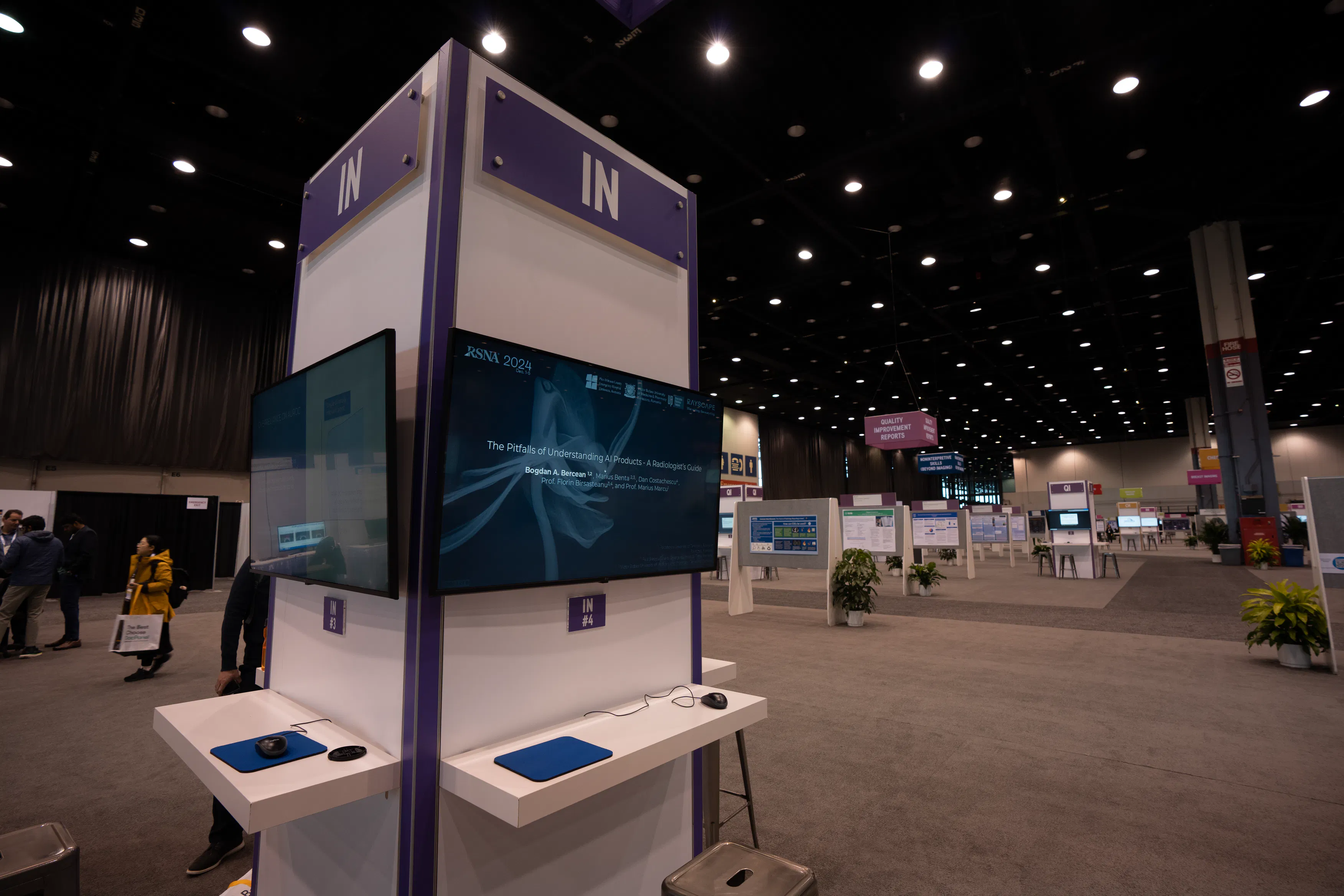
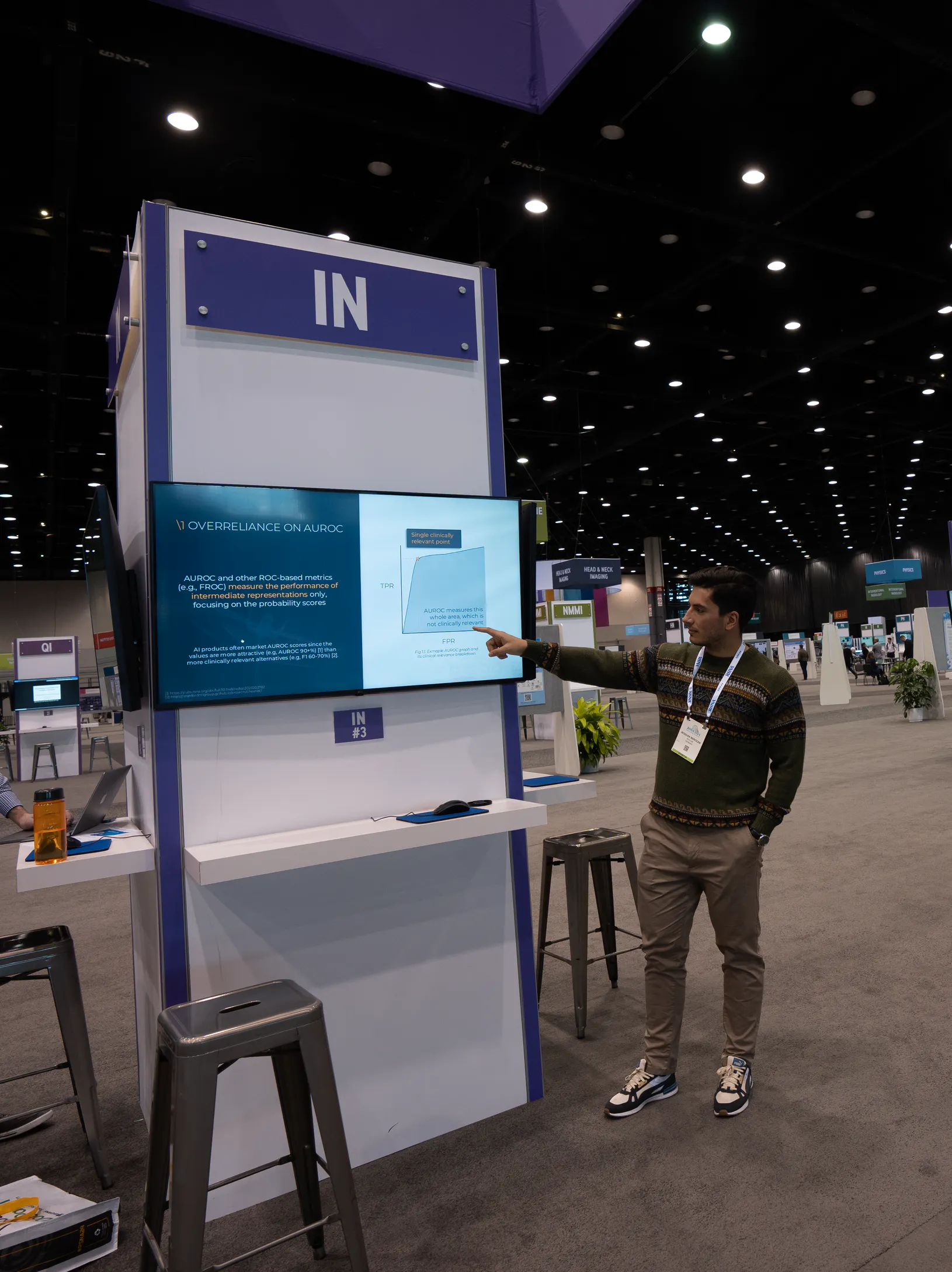
Our personal journey at RSNA 2024 was especially meaningful. For the second time, we anchored ourselves in the exhibit halls at our booth. For the first time, we organized an insightful panel about the role of AI in abdominal imaging, a field that remained quite uncovered until now. We would like to thank Dr Geraldine Dean, Prof. Ioana-Andreea Gheonea, and Prof. Sukru Mehmet Erturk for stepping up and addressing the challenges of developing new technologies together with Stefan Iarca. Our educational exhibit, The Pitfalls of Understanding AI Products – A Radiologist’s Guide, highlighted by Bogdan Bercean, showcased the importance of navigating complexity thoughtfully.

Attendees approached us with their own questions and concerns—proof that we have reached a moment when the profession is ready to engage with AI’s subtleties, not just its promises.
☕ Pour yourself a cup of coffee and let's dive into the standout moments from this year's congress.
From Concept to Practical Integration: AI Takes Hold
This year, the conversation shifted from theoretical potential to tangible integration of AI into everyday workflows. Rather than asking what AI might someday do, radiologists debated how it should work right now. The focus was on blending automated assistance with human expertise—on AI that can accelerate repetitive tasks, enhance diagnostic precision, and ultimately free radiologists to spend more time on nuanced clinical reasoning.
Generative AI, once regarded as a distant possibility, has stepped onto the main stage. It’s drafting initial report templates, generating synthetic training data, and optimizing imaging protocols, helping teams fine-tune care for diverse patient populations. Far from replacing human insight, these tools act as partners, ensuring that the radiologist’s judgment and empathy remain at the core of patient care.
Confronting Challenges: Bias, Regulation, and Trust
Yet, enthusiasm was tempered by thoughtful caution. As AI becomes more embedded in practice, concerns about bias, slow-moving regulations, and reimbursement come to the fore. Radiology AI expert Nina Kottler, MD, associate chief medical officer for clinical AI at Radiology Partners, put it succinctly: “When it comes to AI bias, it's not just about your patient population; it is also about your equipment or anything that changes the data and keeps it out of distribution from what the training data was.” These words echoed the key message from our own educational session: understanding where AI might stumble is just as important as celebrating where it succeeds.
Overcoming these hurdles will require collaboration, transparency, and trust-building. Developers, clinicians, regulators, and payers must work in tandem to ensure that AI serves all patients fairly and effectively.
Sustainability and Equitable Access: Beyond Technology Alone
Across RSNA 2024, sustainability and equitable care took center stage. Innovations like low-helium MRI systems and modular upgrades are reshaping the equipment lifecycle, hinting at a future where imaging technology can be more resource-efficient and accessible. Companies also highlighted refurbished devices and telemedicine solutions to bridge the gap where traditional resources are scarce.
Value-based care moved from a talking point to a collective imperative. Ensuring advanced imaging reaches underserved regions is no longer an afterthought. The goal is clear: to expand the reach of quality radiology services and make sure that no matter who you are or where you live, you benefit from the advancements presented on this year’s exhibition floors.
Crucially, the participation of companies like GE HealthCare, Siemens Healthineers, United Imaging Healthcare, and Philips underscored their active involvement in steering the industry toward sustainability. One standout in this regard was Philips’ next-generation 1.5-tesla BlueSeal MR wide-bore scanner, equipped with AI-driven workflow tools. It symbolizes a future that doesn’t just promise convenience, but also durability, reduced environmental impact, and a patient-centric approach that’s hard to ignore.

Looking Ahead with Determination and Hope
With more than 200 exhibitors showcasing AI-driven solutions, RSNA 2024 confirmed that artificial intelligence is no passing trend. The conversations and technologies we saw this week painted a picture of radiology that’s more connected, empathetic, and resilient than ever before.
As we look ahead, we carry with us a sense of balance—excitement tempered by responsibility, and innovation guided by ethics. The connections forged here, both between people and between ideas, will shape the profession for years to come. We return to our practices and projects determined to nurture these intelligent connections, committed to using them for the betterment of radiology and the patients it serves.
To all champions of our mission, thank you. We eagerly anticipate pushing the boundaries of healthcare technology and fostering a positive global impact together. Stay tuned as we journey into the future.
See you at RSNA2025!
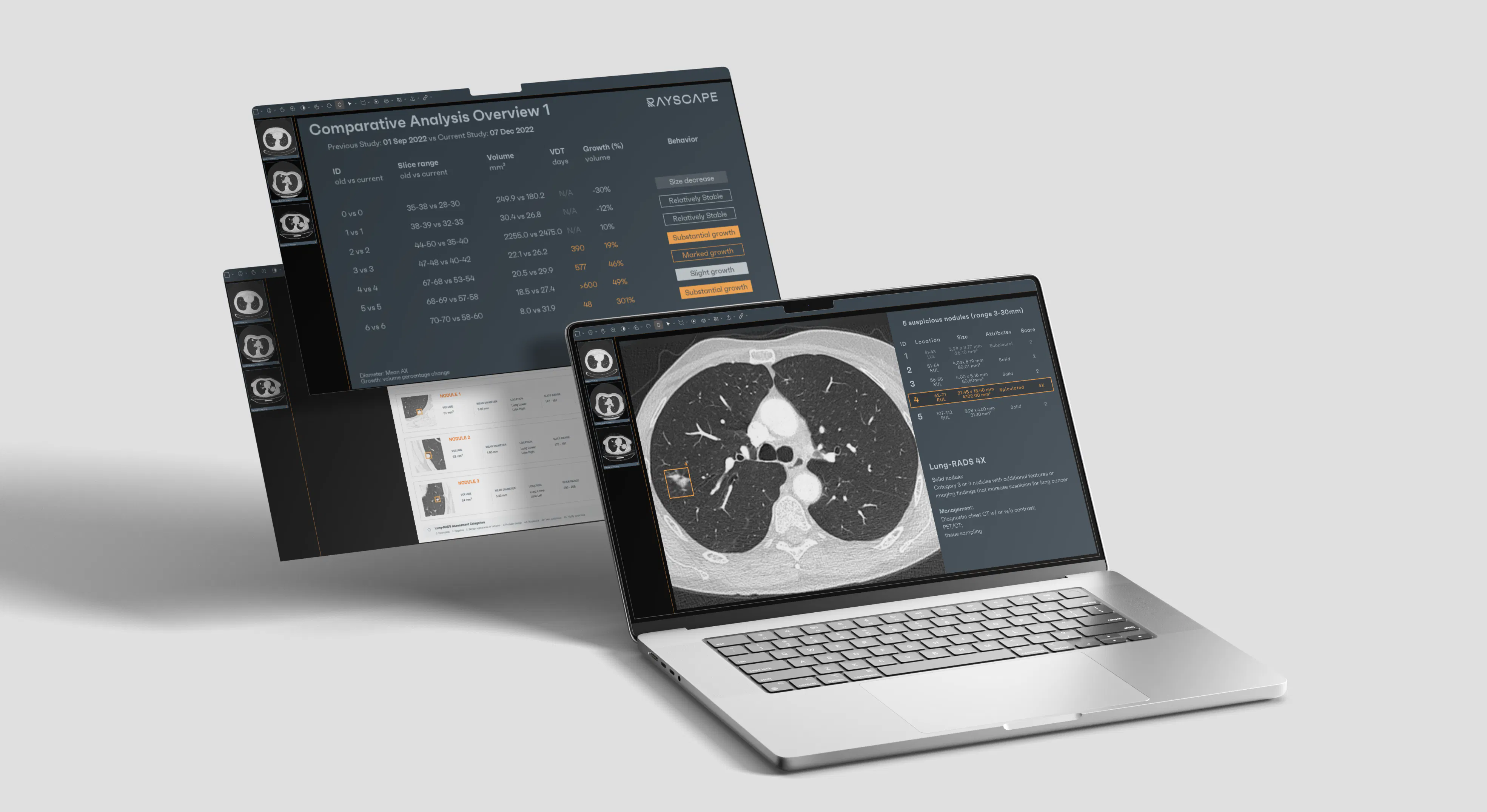

Discover how Rayscape works
integrate Rayscape AI into
your hospital's infrastructure
and improve both your
daily workflow and patients' experience.
